

How Two Farms in Senegal Became Major Suppliers of the UK’s Winter Vegetables
Far from British farmlands and European greenhouses, two large agricultural operations in northern Senegal have quietly become some of the most important suppliers of vegetables to the United Kingdom. During the winter months, when domestic production in the UK slows due to cold weather, these farms
Ogyem Solomon
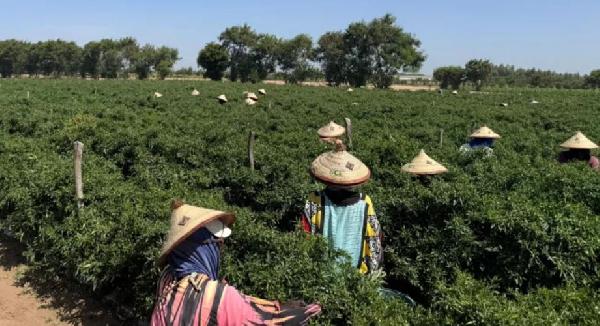
Far from British farmlands and European greenhouses, two large agricultural operations in northern Senegal have quietly become some of the most important suppliers of vegetables to the United Kingdom. During the winter months, when domestic production in the UK slows due to cold weather, these farms play a critical role in keeping supermarket shelves stocked with fresh produce.
Located in the Saint-Louis region, close to the edge of the Sahara Desert, the farms operate in what would normally be arid, unproductive land. However, through large-scale irrigation systems linked to the Senegal River, vast stretches of dry soil have been transformed into fertile farmland capable of year-round cultivation.
These two farms are run by British-backed agricultural companies that have invested heavily in irrigation infrastructure, logistics, and modern farming technology. Together, they produce large volumes of vegetables including spring onions, green beans, radishes, sweetcorn, chillis, butternut squash and other fresh produce that end up in major UK supermarkets during the winter season.
Between January and March, British consumers regularly purchase vegetables labelled “Product of Senegal” in leading retail chains, often without realising how central these farms are to the UK’s food supply system. From West Africa to British Supermarkets
The farming process relies on a carefully managed production and logistics chain. Water is channelled from the Senegal River through canals, pumps and pipelines that feed thousands of hectares of farmland. Crops are grown continuously throughout the year under Senegal’s warm climate and consistent sunlight.
Once harvested, vegetables are immediately packed and cooled at on-site facilities before being transported by truck to the Port of Dakar. From there, container ships carry the produce across the Atlantic to ports in southern England. In many cases, the journey from field to UK supermarket shelf takes less than a week, allowing vegetables to arrive fresh and ready for sale.
This system allows British supermarkets to maintain a steady supply of fresh vegetables during months when European production declines and greenhouse cultivation becomes more expensive. Why Senegal Has Become a Strategic Supplier
Senegal’s growing role in the UK’s food supply is driven by a combination of climate, geography and economics. While parts of southern Europe increasingly face drought, water shortages and rising production costs, Senegal offers reliable sunshine, available land and access to river-based irrigation.
In addition, the country’s political stability and agricultural policies allow long-term land leasing arrangements, making it attractive for foreign agricultural investment. This has enabled companies to develop large-scale farms with long-term planning and infrastructure development.
Another factor is logistics. Sea transport from West Africa to Europe, although long-distance, is more environmentally efficient than air freight, making it a commercially viable option for mass produce distribution. Economic Impact and Employment
These farms provide thousands of jobs, particularly for women, in farming, harvesting, packaging and processing roles. For many communities in northern Senegal, the farms represent one of the most stable sources of employment and income.
While wages remain modest, the scale of employment has had a significant economic impact in rural areas where job opportunities are limited. Training programmes and agricultural skill development have also contributed to workforce growth in the region.
However, the presence of foreign-owned farms has also sparked debate. Some critics raise concerns about land use, water access and the long-term sustainability of large-scale export farming in developing countries. Environmental groups also question the carbon footprint of transporting food across continents, even when shipped by sea. A Changing Global Food System
The role of these Senegalese farms highlights how global food systems are evolving. The UK already imports a large percentage of its food, and during winter months, dependence on international supply chains increases sharply.
Rather than relying solely on European producers, British supermarkets are now sourcing food from Africa, South America and Asia to maintain year-round availability of fresh produce. Senegal’s farms have become a key part of that strategy.
This shift reflects a broader transformation in global agriculture, where climate change, water scarcity, economic pressures and consumer demand for constant availability are reshaping where food is grown and how it is distributed.
For UK consumers, the vegetables may look ordinary on supermarket shelves. But behind them lies a complex international system connecting African farmland, global shipping routes and European retail markets a system in which two farms in northern Senegal now play a quietly vital role.
Source: Thepressradio.com
More Related Articles

Rosatom Highlights HR Development at BRICS Nuclear Platform Expert Session
Experts from the nuclear energy sector gathered in Cape Town, South Africa, on March 5, 2026, to discuss skills development and workforce training aimed at strengthening nuclear energy capacity across Africa. The discussions took place during an expert session of the BRICS Nuclear Platform, held as

M23 Rebels Claim Responsibility for Drone Attack on Kisangani Airport
The M23 rebel group has claimed responsibility for a drone attack targeting the airport in Kisangani, a key city in the northeastern region of the Democratic Republic of Congo (DRC). The development marks a new phase in the ongoing conflict between the armed group and Congolese government forces, ra

Nigerian Oil Billionaire Ordered to Pay Twin Daughters $43.51 Million
A Nigerian court has ruled that billionaire businessman Muhammadu Indimi and his privately owned company, Oriental Energy Resources Ltd., must pay $43.51 million to his twin daughters following a protracted legal dispute over unpaid dividends. The Federal High Court delivered the ruling after sister