

WATCH: Asiedu Nketiah Critiques Ntim Fordjour Over Cocoa Pod Display at 2026 SONA
A political debate emerged during Ghana’s 2026 State of the Nation Address (SONA) after Johnson Asiedu Nketiah, General Secretary of the National Democratic Congress (NDC), publicly criticised Dr. Ntim Fordjour over the use of cocoa pods as part of the stage display at the event. The incident drew a
Ogyem Solomon
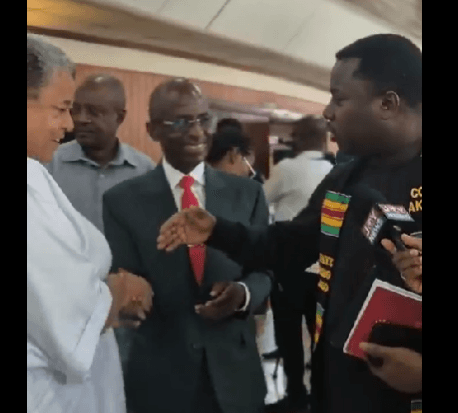
A political debate emerged during Ghana’s 2026 State of the Nation Address (SONA) after Johnson Asiedu Nketiah, General Secretary of the National Democratic Congress (NDC), publicly criticised Dr. Ntim Fordjour over the use of cocoa pods as part of the stage display at the event.
The incident drew attention immediately after President John Dramani Mahama delivered his address. Asiedu Nketiah argued that the large cocoa pods, featured prominently onstage, were unnecessary and served more as a political spectacle than a meaningful representation of government action. He stressed that Ghanaian farmers and citizens were more concerned with practical measures such as stable pricing, better infrastructure, and support for the cocoa industry rather than symbolic displays.
Dr. Ntim Fordjour, who is the Minister of Information, had defended the display, explaining that it symbolised government attention and commitment to the cocoa sector, which is a major contributor to Ghana’s economy and a livelihood source for millions of farmers. Supporters of the display suggested that using cocoa pods onstage was a visual method to highlight policy initiatives and achievements in agriculture.
The exchange quickly became a topic of discussion on social media, with Ghanaians expressing mixed opinions. Some praised Asiedu Nketiah for questioning the appropriateness of symbolic gestures at a formal national event, while others viewed the criticism as overemphasising a stage decoration rather than substantive policy matters.
Political analysts noted that symbolic visuals at major national events like the SONA often attract public and partisan commentary. While they can be effective in drawing attention to key sectors, such as agriculture, they can also spark debate about whether visuals overshadow actual policy outcomes.
The disagreement underscores how even small details at national events can become focal points for political debate, particularly on issues like the cocoa industry that directly affect a large portion of the population. Asiedu Nketiah’s comments reinforce the expectation among citizens that symbolism should be matched with tangible action to support farmers and strengthen Ghana’s agricultural sector.
Watch the video below:
Watch the heartwarming moment as Gizella Tetteh, Rev Ntim Fordjour, and Asiedu Nketia exchange pleasantries after SONA2026 A playful jab from Asiedu Nketia to Rev. Fordjour: “Do you know cocoa is the symbol of UP… and there’s UP in town-” 😄#JoyDigital #JoyNewsFocus pic.twitter.com/EUIVM6uhkl
— JoyNews (@JoyNewsOnTV) February 27, 2026
Source: Thepressradio.com
More Related Articles

OSP Confirms INTERPOL Deletes Red Notice Against Former Finance Minister Ken Ofori-Atta
The Office of the Special Prosecutor (OSP) has officially confirmed that the International Criminal Police Organization (INTERPOL) has removed the Red Notice previously associated with Ken Ofori-Atta, Ghana’s former Minister of Finance. The announcement marks a major development in the high-profile

Police Re-Arrest Key Suspect in Fatal Shooting of Officers at Kariminga Police Barrier
The Ghana Police Service has re-arrested a key suspect in connection with the fatal shooting of police officers at the Kariminga police barrier in the Upper East Region, marking a major breakthrough in a case that has deeply affected the nation’s security services. The suspect, Abdul-Aziz Iddrisu, a
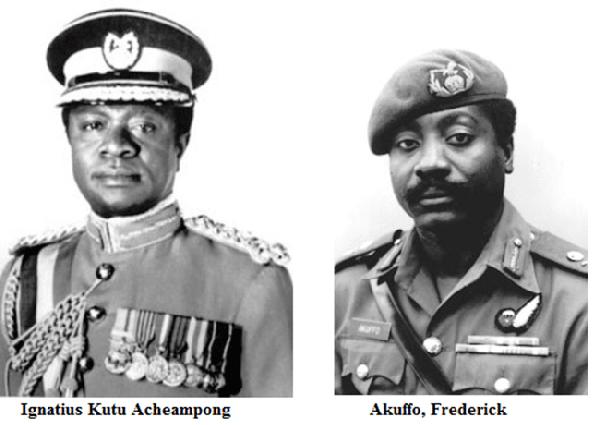
The Real Reason Behind the Execution of Three Former Ghanaian Leaders During the Rawlings Era
One of the most controversial and emotionally charged chapters in Ghana’s political history remains the events of 1979, when three former heads of state were executed during the revolutionary period led by Jerry John Rawlings. Decades later, the reasons behind the decision continue to generate natio