

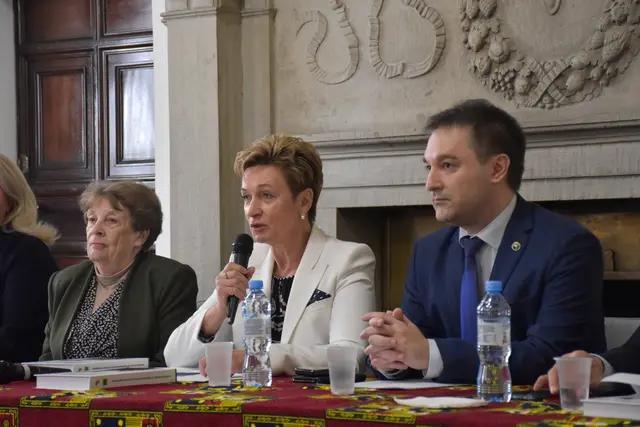
The Centre for Transition Economy Studies of the Institute for African Studies at the Russian Academy of Sciences held a two-day scientific conference themed “Industrial Development Strategies of African Countries” on March 18–19. The event brought together more than 40 researchers and experts from Russia, South Africa, Nigeria, Egypt, and North Macedonia to discuss Africa’s industrial future and opportunities for cooperation.
The conference was officially opened by Professor Irina Abramova, Director of the Institute for African Studies. Discussions centered on Africa’s industrial development, modernization of production systems, and expanding cooperation between Russia and African countries.
The first day of the conference, held in person, focused on key sectors such as manufacturing, extractive industries, special economic zones, energy, transport infrastructure, digital transformation, and the agro-industrial sector. The second day was conducted online in English, featuring African scholars and experts who contributed to discussions on the localization of production chains across agriculture and mineral processing industries.
Key discussions covered continental, regional, and national industrial development programs in Africa, as well as the prospects for integrated production chains across the continent. Participants also examined manufacturing and agro-industrial markets, infrastructure development needs, and the role of energy, transport, and digital systems in supporting industrial growth.
Other major themes included the role of multinational corporations in Africa, government regulation of export-import flows, the influence of international organizations, and opportunities for expanding mutually beneficial cooperation between Russia and African economies.
A significant highlight of the conference was the presentation of a comprehensive African Development Strategy database, developed by Professors D. A. Degterev and A. D. Novikov alongside IAS researchers. The database compiles over 400 official strategic planning documents from 53 African countries covering the period between 1997 and 2025, organized into key thematic areas including industrial policy, ICT, agriculture, water resources, and long-term development strategies.
During the plenary session, nine presentations explored different aspects of Africa’s industrial landscape. One report analyzed export patterns in African machine-building industries using ITC Trade Map data from 2019 to 2024, highlighting industrial output trends in countries such as South Africa and Tunisia, as well as intra-African trade dynamics.
Another presentation examined institutional frameworks for Russian-African economic cooperation, noting that intergovernmental commissions increased from four in 2023 to nine in 2025. It also highlighted plans to expand investment support funds for African projects to at least $65 million (approximately 5 billion rubles) for the 2026–2027 period.
Additional discussions addressed financing industrialization in Africa, including critiques of Western development models and proposals for country-specific financing strategies tailored to African economic realities. Case studies also explored Russian investment activities in the Alliance of Sahel States, alongside discussions on digitalization and artificial intelligence development across sub-Saharan Africa.
The conference further highlighted cooperation in education and technology transfer, including agro-biotechnology initiatives through the Afro-Russian Center for Technology Development in Kampala. It was noted that 467 African students were trained in Russian universities during the 2025–2026 period under related programs.
Other presentations examined global competition for African markets in sectors such as energy, transport equipment, and pharmaceuticals, as well as Africa’s emerging role in digital transformation, including cybersecurity development in West Africa and data center expansion strategies in countries like South Africa, Algeria, and Morocco.
A recurring theme throughout the conference was the gap between industrialization goals and actual economic structures in many African countries. Despite the widespread adoption of national development strategies, industrial output remains relatively low, accounting for only about 10–12% of GDP in many cases, with exports still heavily dependent on raw materials.
Participants emphasized the need for African countries to transition toward more sovereign, resource-based industrial strategies while strengthening international cooperation, particularly with partners from the Global South, including Russia.
The conference is expected to conclude with the publication of a collective monograph summarizing the discussions and research findings, alongside the official presentation of the African development strategy database.
Source: Kestér Kenn Klomegâh| Contributor| Russia